Overview of the civilization of the ancient Shu Kingdom
  Chengdu Plain has a long history of development where the legendary ancient Shu people had multiplied since a very early time. "Shu" is not only a tribal but also a national title. For centuries, people of the ancient Shu had been working and living on this fertile land in the upper reaches of the Yangtze River. They had created a splendid civilization in ancient Shu, composing a glorious chapter in Chiese culture history and particularly the history of the development of China's western region.
  Like most other ancient civilizations, that of the ancient Shu retains many beautiful legends. Throughout the system of ancient Chinese history, early history of the Shu has a very deep relation with the Yellow Emperor and his Queen Leizu. Through legends and literature, we can clearly see the ancient Shu civilization is one whichwas inextricably linked with that of central China but simultaneously engraved with their own distinct imprint.
  There are a lot of ancient literature and legends which record people of the ancient Shu moving from the upper reaches of Minjiang river all the way down into the Chengdu Plain.The latest archaeological materials show that as early as about 5500-5000 years ago in the upper reaches of Minjiang River frequent human activities had taken place. In the Yingpanshan relics in Maoxian County northwest of Sichuan Province, sites of large villages and intensive housing locations and a few human sacrifice pits have been discovered. The discovery of this relics site will prove to be of dramastic significance for our understanding of the origin of the ancient Shu people.

Baodun Cultural Heritage
  At present, the earliest archaeological and cultural heritage discovered within the Chengdu Plain that can be traced back rests on the Baodun culture about 4500!3700years ago in late New Stone Age. Since 1996, eight city ruins of this period have been discovered on the Chengdu Plain, indicating that the Chengdu Plain then was of a large population and quite developed agriculture. These sites of the city ruins are mostly on the river platform and constructed along the river in parallels. All cities ruins have tall earth walls and some have wide trenches around. These designs areevidently for defense or may be for water control. Area of the city ranges from 100 to 600 thousand square meters, with the housing built into a rectangular by wood (bamboo) boned earth walls. In some cities large ceremonial structures were also discovered from which archaeologists anticipate that concentrated communities with religious and political centers have emerged. Production tools at that time were mainly thouroughly polished small stone objects and people then seemed to have already mastered the cutting and drilling technologies. Pottery were manufactured by coil-building the mud bars and then dressind them by slowly rotating the wheels. The shape of the pottery shows a variety of changes. All of these indicate that production technology then was quite advanced and people had been enjoying the settled farming life. The period of Baodun Culture is claimed to be the time when cities and nations had come into being and also the origin of civilization in ancient Shu.

Sanxingdui Culture
  About 3700 to 3200 years ago, Chengdu Plain began to enter into the Sanxingdui civilization which is really the developed bronze culture of distinct local flavor by learning from the Central Chinese civilization of the Xia and the Shang Dynasties the bronze metalworking technology and from the artistic achievements on the basis of the Baodun culture. Within the 3.6 million-square meter ancient city sites of Sanxingdui, intensive housing sites and many burial pits, hoards, handicraft workshops and concentrated cemetery remains had been found and large numbers of gold, bronze, jade and ivory objects that have shocked the world for their exquisiteness were also unearthed. These objects are peculiar in form and style with rich cultural connotation and unique artistic individuality. It shows that Sanxingdui Ruins was then a civilized nation with a great amount of wealth, developed bronze smelting technology and jade processing technology and obvious features of primitive religion which made it the political, economic, religious and cultural centre in the upper reaches of the Yangtze River.Sanxingdui civilization consists of the brilliant chapter during the development of the ancient Shu civilization.

The 12-Bridge Culture
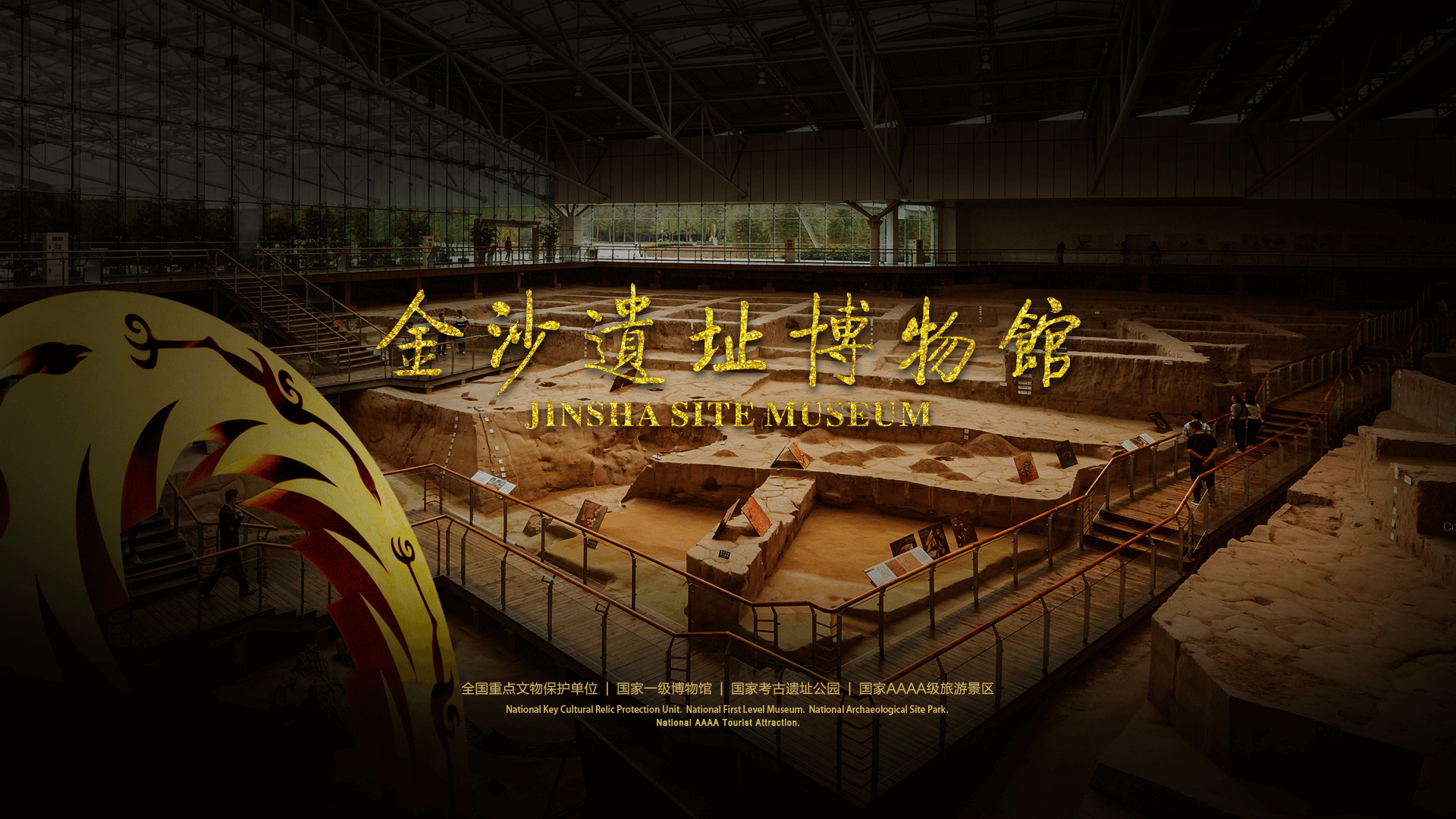
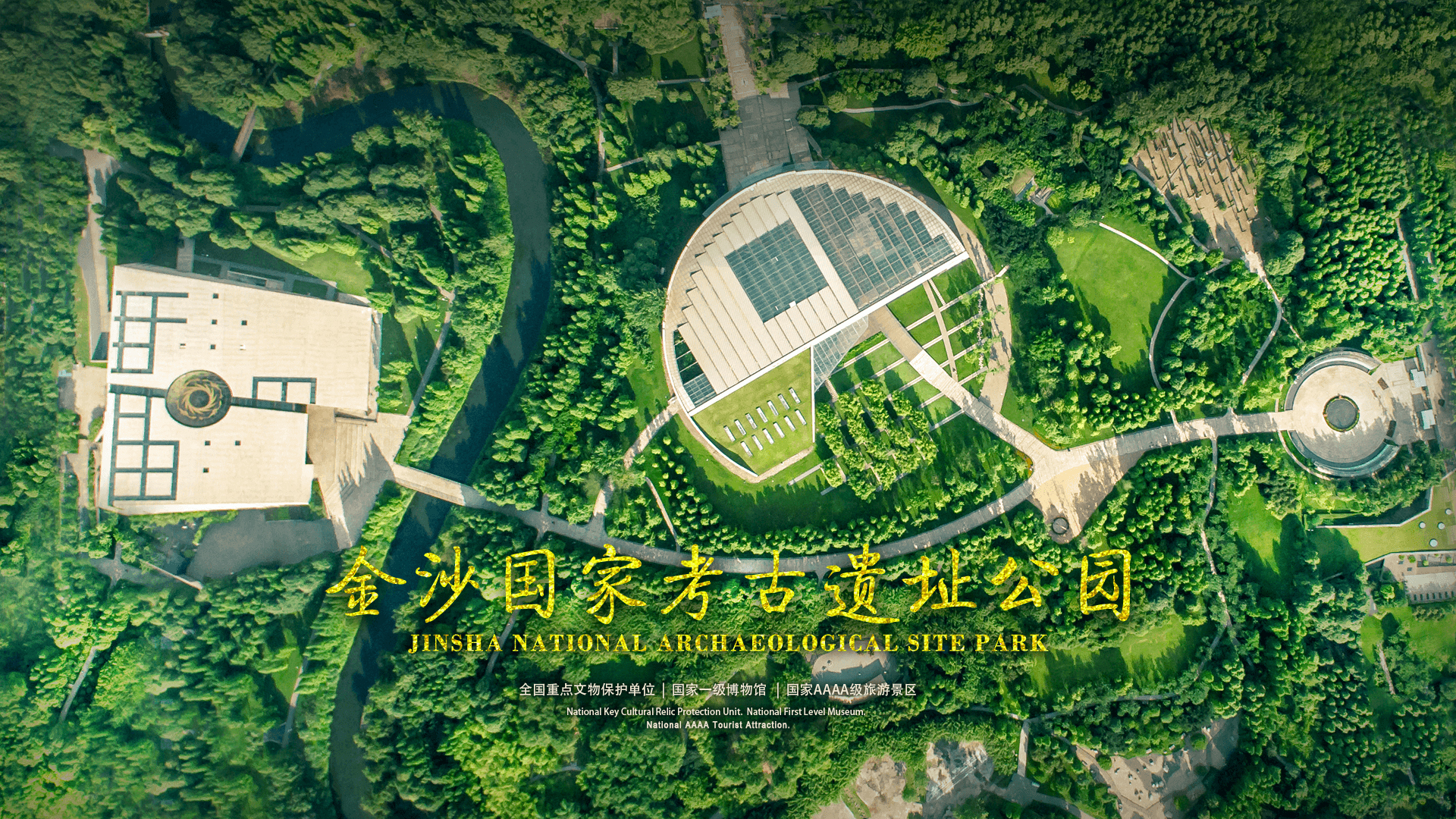
  Sanxingdui Kingdom callapsed about 3000 ago when the cultural center of the ancient Shu began to be transferred to the diaphragmatic area of Chengdu Plain, making a new stage of development of the ancient Shu civilization -- The 12-Bridge culture period. The 12-Bridge Culture is about 3200 to 2600 years from the present day and is an archaeological culture of the mid-Bronze Age in the Sichuan basin.It inherited a lot of cultural factors from Sanxingdui Culture while containing many new elements with the cultural contexts widely distributed. Housing construction in this period fell into two structures, that of column-wood construction and wood (bamboo) boned earth walls. Stone production tools were still mainly those thouroughly polished small stone ax, hammer and chisel. Pottery with pointed bottom were in popular use and prevalence of the fortune-telling tortoise-shell was a prominent feature of this period. The Jinsha ruins discovered in early 2001 is the biggest withthe most abundant remains which are of the highest and the longest time span. It has been proved that the Jinsha ruins cover an area of more than 5 square kilometers with cultural heritage mainly from the late Shang Dynasty to the Western Zhou Dynasty. Large areas forconstruction sites, sacrificial activities, the usual residence, graveyards and other important relics site have been found within the ruins district. In the worship area large numbers of objects related to religious ceremonies and rituals were unearthed which look the same with or similar to Sanxingdui Culture. In this way, it can be assured that following the demise of the Sanxingdui civilization, the Jinsha civilization began to emerge as a new political, economic, religious and cultural center on Chengdu Plain and the place another big city of the ancient Shu Kingdom lying. In brief, the Jinsha culture used to be another brilliant stage of development of the ancient Shu civilization.

Civilizatin of the late Shu period
  The period from 600 BC to 316 BC when time proceeded from the Warring States period all the way to Qin Dynasty and then the Bashu age saw the last peak during the development of civilization in ancient Shu,which is now called the period of the late Shu civilization. The large-scale boat-coffin cemetery and the quality wood coffin tombs in Xindumajia discovered in the urban area Chengdu are possibly tombs of the king or the royal members of the Shu Kingdom. Huge boat-coffins, exquisite lacquer, copper weapons with the great geographical features of Bashu district and the Bashu sign which still remains unknown today represent the development of the civilization in this era.
  After 316 BC, the Bashu power was wiped out by Qin Dynasty and the Bashu culture became eventually integrated into the Han culture till the reign of Hanwu Emperor in the mid Western Han Dynasty. By this time, history of the ancient Shu Kingdom was finally drawn to conclusion with the ancient Shu culture becoming an integral part of the Chinese civilization as a whole.