
Ancient Shu Civilization Goes Global: "Behind the Mask: Discovering Sanxingdui and Jinsha" Exhibition Held at Oxford University
Release Time: 2025-11-10
Jessica Rawson, a renowned archaeologist at the University of Oxford, once described the archaeological discoveries at Sanxingdui as "extraordinary, astonishing, and unique." In May 2024, after visiting the Sanxingdui site, she expressed her hope for more cultural and academic exchanges between the East and West centered around Sanxingdui. "Sanxingdui possesses a global appeal that deserves the attention and discussion of the entire world," she said.
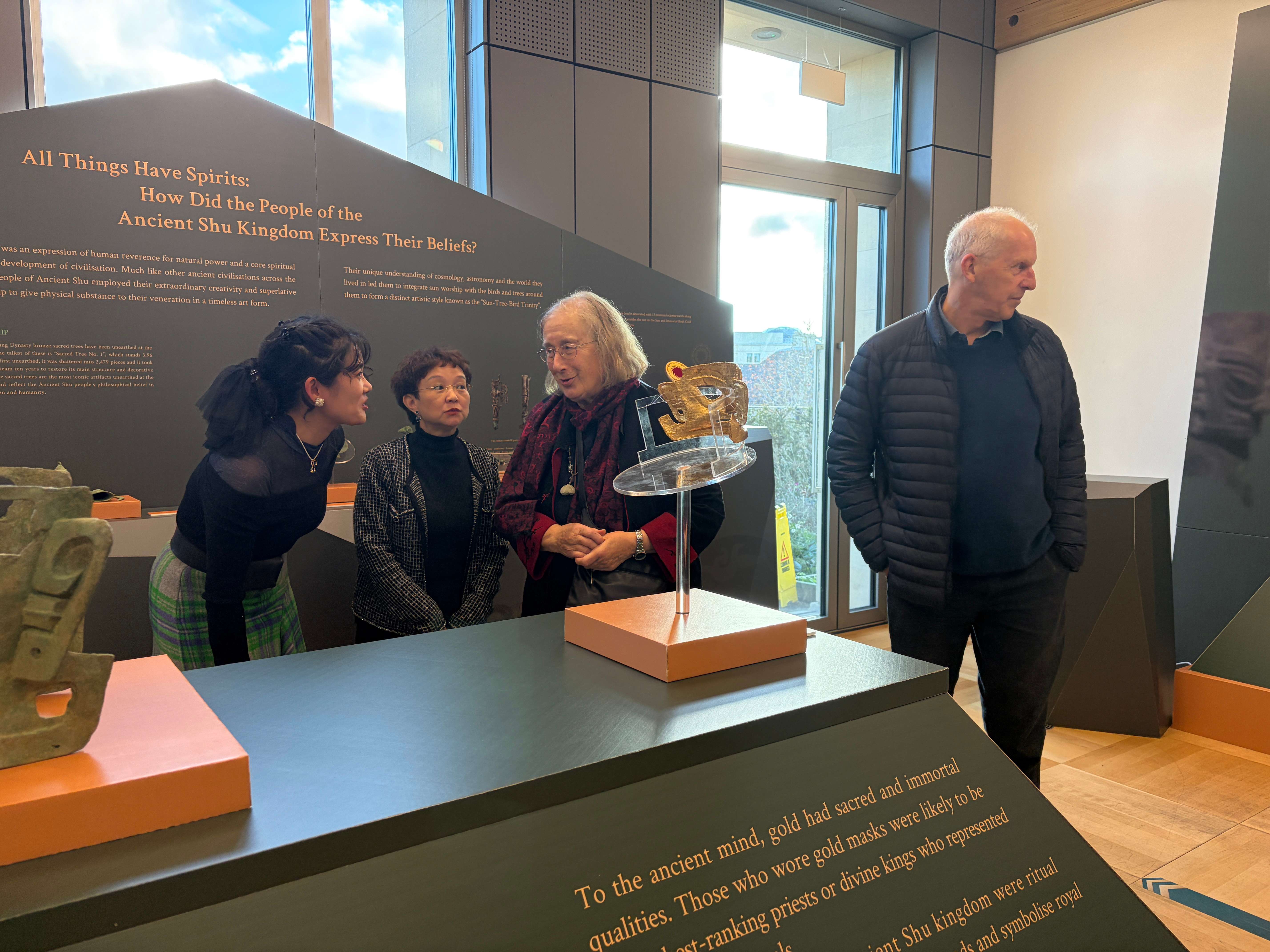
On November 8, local time in the United Kingdom, the exhibition "Behind the Mask: Discovering Sanxingdui and Jinsha" and its accompanying events were unveiled at the University of Oxford. The event was organized under the guidance of the Sichuan Provincial Cultural Heritage Administration and co-hosted by the Sichuan Cultural Relics Exchange and Information Center, the Sanxingdui Museum, and the Chengdu Jinsha Site Museum. It was undertaken by Foreign Language Teaching and Research Press (UK) and Southwest Jiaotong University. This event also marked the first stop of the Sanxingdui–Jinsha Sites "Entering World-Class Universities" series. Distinguished guests in attendance included Pu Xin, Deputy Director of the Sichuan Provincial Cultural Heritage Administration; Professor Donna Kurtz, Emeritus Professor at the University of Oxford; Dr. Anke Hein, Associate Professor of Chinese Archaeology at the University of Oxford and St Hugh’s College; Xie Zhenbin, Deputy Director of the Sichuan Museum; Wang Fang, Deputy Director of the Chengdu Jinsha Site Museum; Feng Shiwei, Deputy Director of the Sanxingdui Museum Scenic Area Management Committee; Li Haichao, Professor at the School of Archaeology and Museology, Sichuan University; and Wang Shengyu, Deputy Director of the University Museum and Art Gallery, The University of Hong Kong.
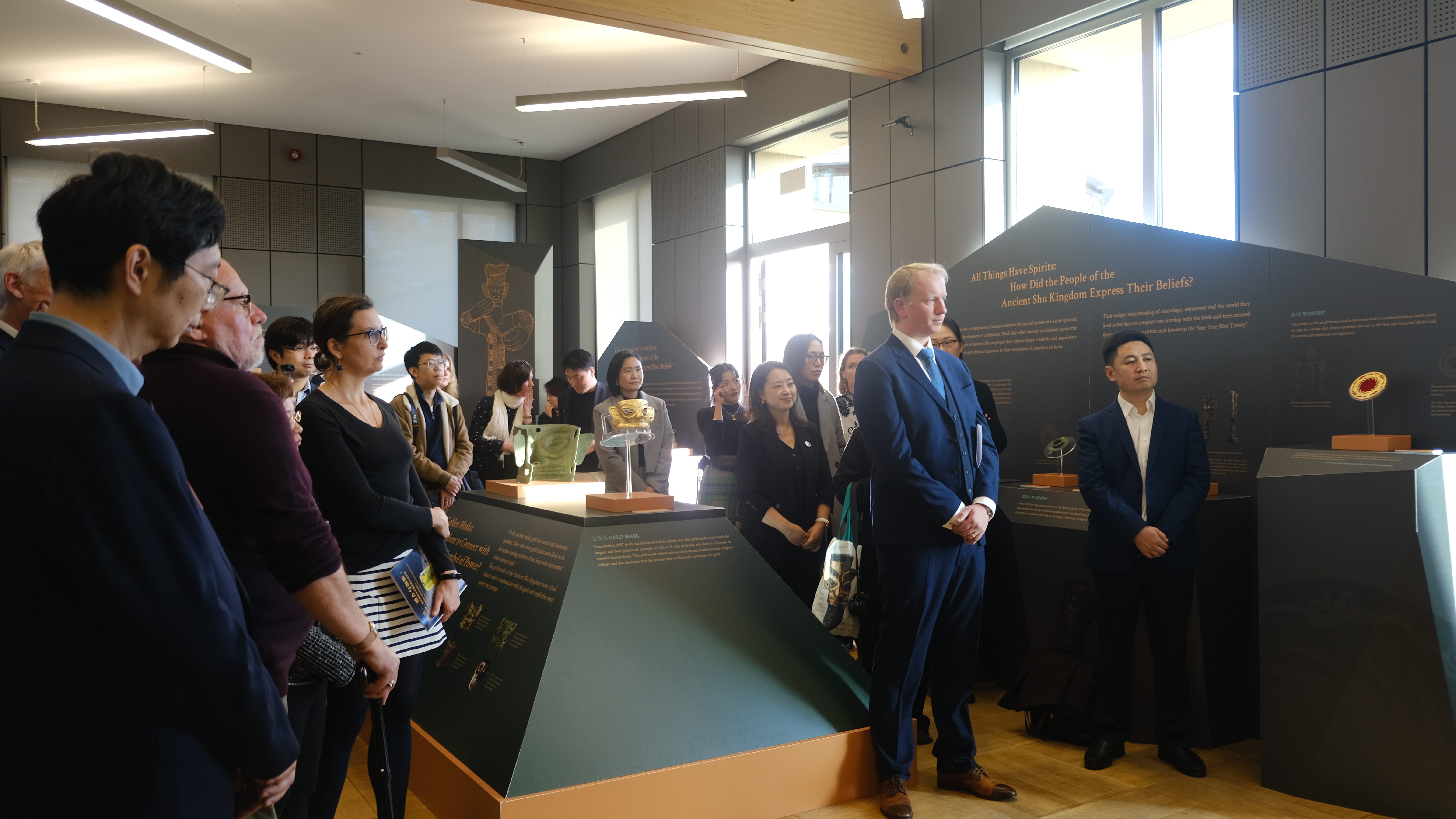
In his address, Pu Xin emphasized that the significance of the Sanxingdui–Jinsha sites goes far beyond their archaeological value—they constitute a pivotal chapter in the history of Chinese archaeology. From the very first seasons of excavation, international scholars were involved in the work at both sites. The latest round of excavations at the Sanxingdui sacrificial pits in 2019—featuring advanced archaeological concepts, interdisciplinary collaboration, and multi-institutional cooperation—has set a benchmark for the on-site scientific conservation of archaeological projects in China. In fact, international involvement has been a constant thread in the excavation and study of Sanxingdui. As early as the late 1920s, soon after the site came to light, the English missionary V. H. Donnithorne offered invaluable assistance that made its first scientific dig possible. After more than 3,000 years of silence, Sanxingdui began to capture worldwide attention. The present exhibition retraces the excavation histories of both Sanxingdui and Jinsha, spotlighting the scholarly exchange and collaboration between Chinese and British archaeologists.
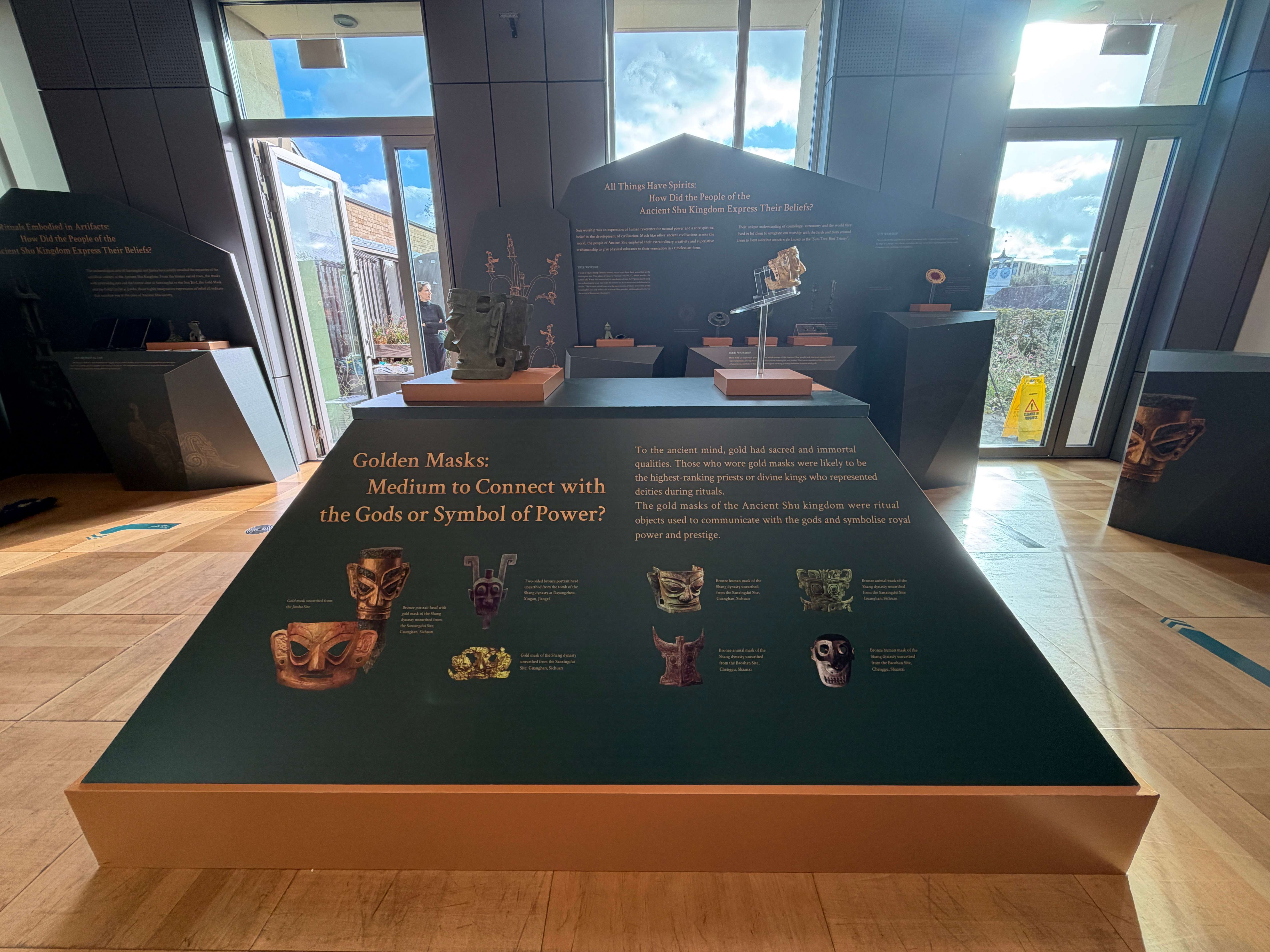
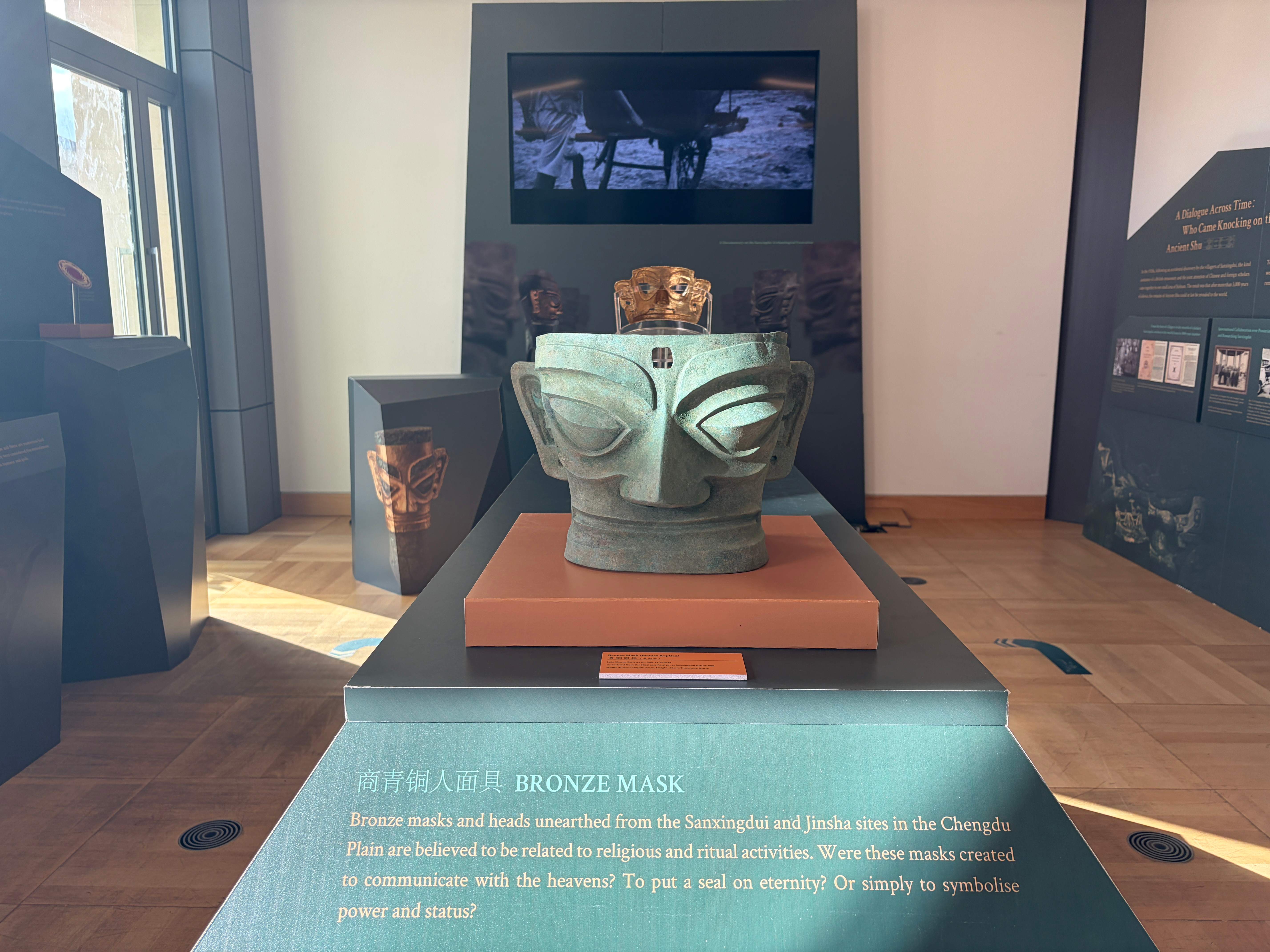
At the exhibition, seventeen replicas and 3D prints from Sanxingdui and Jinsha, including the Gold-Masked Bronze Human Head, the Kneeling Figure with Twisted Head, and the Sun and Immortal Birds Gold Ornament, one of the thinnest and most exquisite gold ornaments ever created, and the Gold mask, were unveiled to Oxford students and scholars. Through wall panels, film, and VR headsets they entered a virtual world where they sensed the distinctive spiritual universe of ancient Shu and explored the daily life of its peoples three millennia ago.
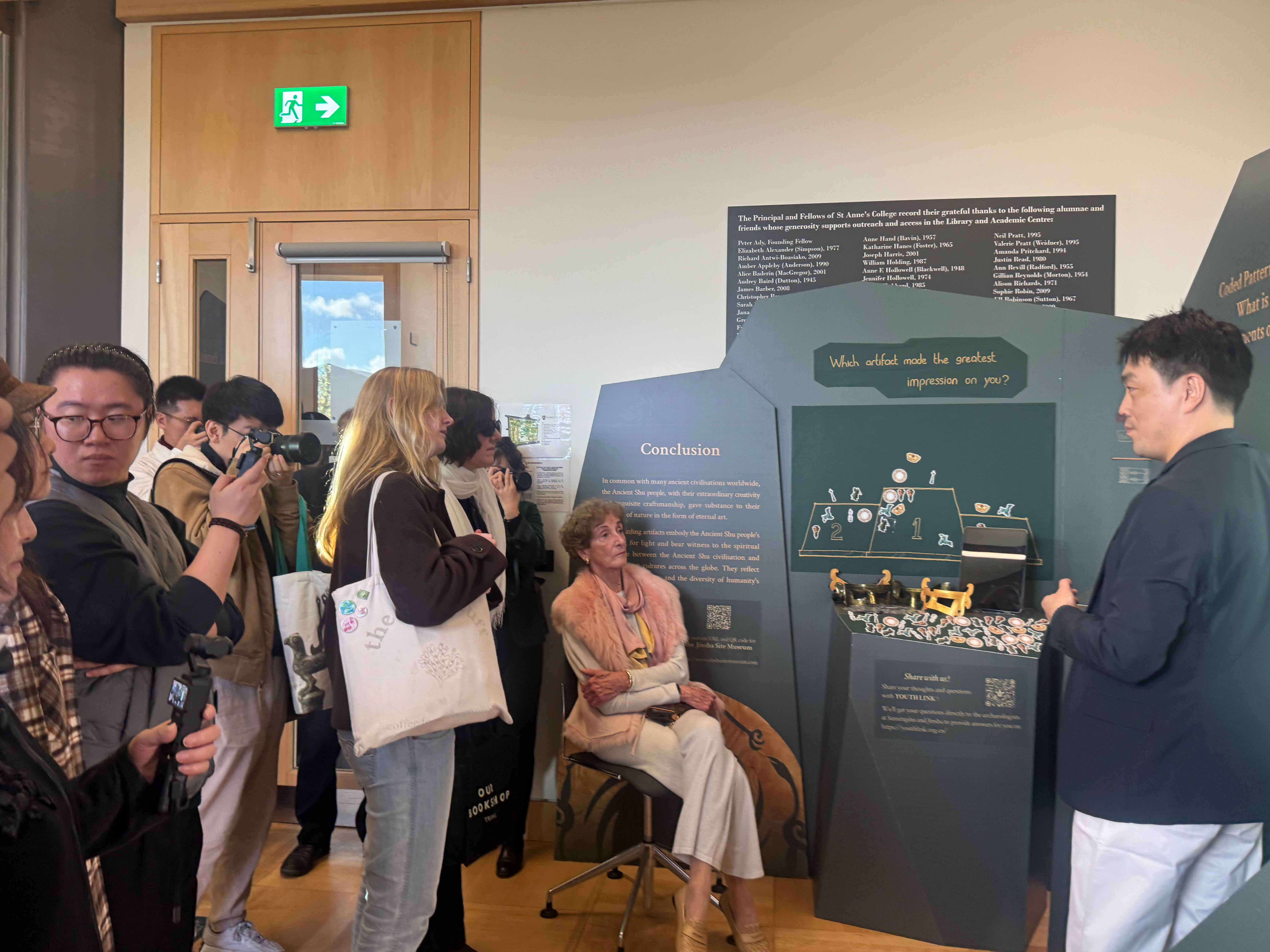
The exhibition hall was packed with visitors; a constant buzz of discussion surrounded the bronzes’ striking forms, the exquisite craftsmanship of the gold masks, the artistic brilliance of the objects, and the clear connections between the discoveries from the two sites. Emeritus Professor Donald Cortezz was delighted to meet Sanxingdui and Jinsha in Oxford, and the splendour of the objects, the profound cultural depth and distinctive artistic style left him declaring, “Excellent! This is the most beautiful Sanxingdui exhibition I have seen outside China.”
Beyond the show itself, the symposium “Viewing China through Archaeology: History, Culture and Art” convened in Oxford that afternoon. Scholars from both countries delivered keynote lectures and entered into dialogue on the Sanxingdui–Jinsha complex.
From the heart of the Chengdu Plain to the esteemed academic center of Britain, specialists from around the world gathered to watch the ancient Shu civilization ignite the halls of global scholarship.